12 - Magnesium alkaline earth metal
Discovered by Joseph Black in 1755
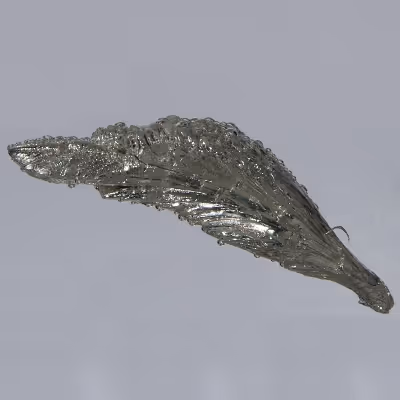
Magnesium is a chemical element with symbol Mg and atomic number 12. It is a shiny gray solid which bears a close physical resemblance to the other five elements in the second column (Group 2, or alkaline earth metals) of the periodic table:they each have the same electron configuration in their outer electron shell producing a similar crystal structure. Magnesium is the ninth most abundant element in the universe.
Periodic table
| Shell | Electrons | Orbitals |
|---|---|---|
| 1 | 2 | 2 in 1s |
| 2 | 8 | 2 in 2s + 6 in 2p |
| 3 | 2 | 2 in 3s |
Electron shells
shiny grey solid Appearance
24.3 u Atomic Mass
1.5 Å Atomic Radius
1.36k K Boiling Point
2 Group
2 Common Oxidation States
1.41 Å Covalent Radius
1.74 g/cm³ Density
−40 kJ/mol Electron Affinity
1s2 2s2 2p6 3s2 Electron Configuration
[Ne] 3s2 Electron Configuration (semantic)
1.31 Electronegativity
12 Electrons
7.65 eV First Ionization Energy
2 ICSD Oxidation States
737.7, 1450.7, 7732.7, 10542.5, 13630, 18020, 21711, 25661, 31653, 35458, 169988, 189368 kJ/mol Ionization Energies
923 K Melting Point
73 Mendeleev Number
24.9 J/(mol·K) Molar Heat
3 Number of Shells
2 Electron Valency
12 Neutrons
12 Atomic Number
8 Number of Isotopes
1, 2 Oxidation States
3 Period
Solid Phase
12 Protons
2, 8, 2 Electron Shell Occupations
1.02 J/(g K) Specific Heat